Garden Room Layout Ideas
A practical step-by-step guide to garden room layout ideas, including preparation, instructions, common issues, tips, and next steps.
Garden Room Layout Ideas
This guide explains how to approach garden room layout ideas, including the preparation, practical steps, common mistakes, and final checks that help you finish with confidence.
Before You Start
What You Need
Safety, Timing, or Context Checks
Step-by-Step Instructions
Quick Reference
Common Problems When You Plan Garden Room Layout Ideas
Overcrowding the Space
A common mistake is trying to fit too much furniture or too many functions into a garden room, especially if it's on the smaller side. This makes the room feel cramped, difficult to move around in, and less inviting. It can also make it harder to clean.
Fix: Be realistic about the size of your room. Prioritize your most important functions and choose furniture accordingly. Opt for smaller scale or multi-functional pieces. Remember that less is often more when it comes to furniture in a compact space.
Blocking Natural Light
Placing large furniture in front of windows or glass doors can severely reduce the amount of natural light entering your garden room. This can make the space feel dark and gloomy, impacting mood and productivity, especially if it's an office.
Fix: Always consider light sources when positioning furniture. Keep windows clear as much as possible. If you must place furniture near a window, choose low-profile pieces that don't obstruct the view or light path. Use sheer curtains or blinds that can be easily adjusted.
Ignoring Practical Needs (Power, Storage, Heating)
Sometimes, a beautiful layout might be impractical if it doesn't account for essential needs. Forgetting about power outlet locations, sufficient storage for daily items, or easy access to heating controls can lead to frustration and a less functional space.
Fix: Integrate these practical elements into your initial planning. Mark all outlets and consider cable management. Plan storage based on what you actually need to store. Ensure furniture placement doesn't block radiators or vents, and that climate controls are easily accessible.
Choosing Oversized Furniture
Buying furniture that is too large for your garden room can immediately make the space feel smaller and difficult to navigate. A huge sofa in a small room leaves no room for anything else, making it feel disproportionate.
Fix: Always measure your furniture and compare it to your room's dimensions on your floor plan. Look for scaled-down versions of sofas, chairs, and desks. Consider custom-built or modular furniture that can be adapted to your exact space.
Lack of Cohesive Style or Purpose
A garden room can end up feeling disjointed if there's no clear theme or if it tries to be too many things at once without proper zoning. This leads to a cluttered, confused aesthetic rather than a harmonious retreat.
Fix: Revisit your defined purpose (Step 1). Choose a cohesive style or color palette that ties the different elements together. If you have multiple zones, ensure they flow into one another visually. Use art, plants, and accessories to reinforce your chosen theme.
Advanced Tips for Garden Room Layout Ideas
Embrace Vertical Space
For garden rooms of any size, looking up can unlock significant potential. Install floor-to-ceiling shelving units, floating shelves above a desk, or even wall-mounted organizers. This draws the eye upwards, making the room feel taller and more spacious while providing valuable storage without encroaching on floor area. Consider a wall-mounted TV or monitor to free up desk or console space.
Integrate Smart Home Technology
Modern garden rooms can benefit greatly from smart tech. Install smart lighting that can change color or brightness to suit different moods or tasks. Use smart plugs for appliances or heaters, allowing you to control them remotely. A smart thermostat can optimize heating and cooling, ensuring comfort while saving energy. These integrations create a seamless, efficient, and comfortable environment.
Create an Indoor-Outdoor Flow
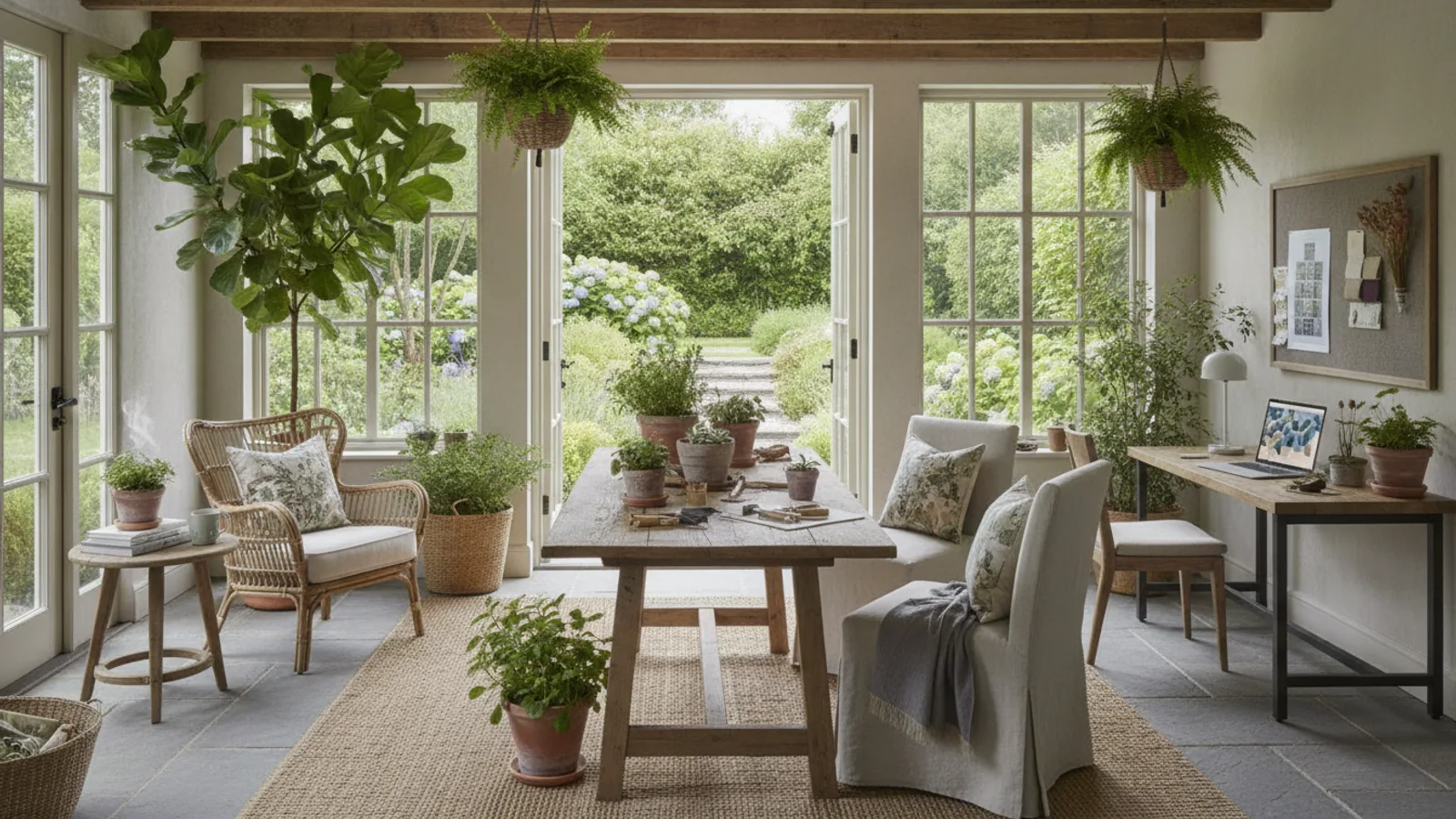
A key advantage of a garden room is its connection to nature. Enhance this by using large bi-fold or sliding doors that open up fully to the garden. Place seating near these openings. Choose natural materials and a color palette that complements your garden's greens and browns. You can even extend a rug or pathway slightly outside the door to blur the lines between inside and out, making the room feel larger and more integrated with its surroundings.
Consider Built-In Solutions
For a truly custom and efficient layout, explore built-in furniture. A built-in desk, shelving unit, or bench seating can be designed to perfectly fit awkward corners, maximize storage, and create a sleek, integrated look. While potentially more costly upfront, built-ins can save space, provide superior organization, and add significant value and functionality to your garden room.
Future-Proof Your Layout
Think about how your needs might change over time. Could your home office become a children's play area or a creative studio in a few years? Design with flexibility in mind. Choose furniture that can be easily repurposed or moved. Ensure electrical and connectivity infrastructure is robust enough for potential future demands. A flexible layout reduces the need for major overhauls down the line.
Optimize Acoustics
Garden rooms can sometimes have hard surfaces (glass, wood) that lead to echoes, especially if used for music, calls, or movies. Consider adding soft furnishings like thick rugs, heavy curtains, upholstered furniture, or even acoustic panels (discreetly placed artwork with acoustic properties). This will absorb sound, making the room feel cozier and improving sound quality for any activity.
Garden Room Layout Ideas FAQ
Final Checklist for Garden Room Layout Ideas
By following these steps and checking off this list, you'll be well on your way to creating a perfectly laid-out garden room that meets all your needs and becomes a cherished part of your home.
FAQ
What should I check before I start?
Check the goal, the key prerequisite, and any current instructions that could change the safest next step for garden room layout ideas.
How can I tell whether the result is working?
Use the practical checks in the guide, pause if a required step is unclear, and verify the finished result against the intended outcome.